Hospitals adopt cleaner air measures
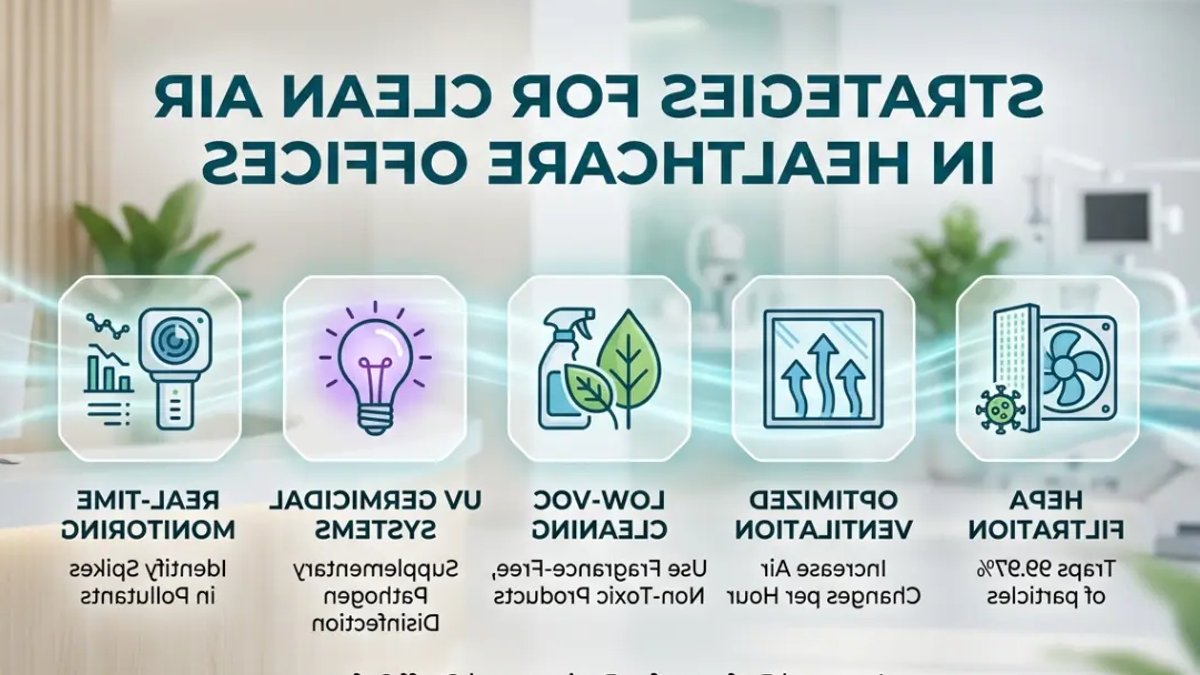
Poor indoor air quality in healthcare settings contributes to hundreds of millions of healthcare-associated infections globally each year, costing high-income countries over $200 billion annually. The issue extends beyond compliance, directly impacting patient safety. Academic medical centers have found that better air quality leads to fewer post-surgical complications, lower readmission rates, and improved staff health.
How healthcare air quality differs
Hospitals and medical offices encounter airborne risks not present in most commercial buildings. The combination of patients, procedures, and cleaning chemicals creates an environment where contaminated air can harm those it should protect. Immunocompromised individuals—including cancer patients, transplant recipients, and people with HIV—face heightened vulnerability. Even brief exposure to airborne pathogens can cause severe infections in these groups.
Contaminants in healthcare settings vary widely. Indoor air carries volatile organic compounds, formaldehyde vapors, particulate matter, CO₂, and anesthetic gases from procedures, cleaning products, and building materials. Outdoor air pulled through ventilation systems introduces additional ozone and particulates. Staff also experience negative effects: poor air quality reduces concentration, increases fatigue, and raises sick leave rates.
Effective filtration systems
HEPA filters remain the standard for clinical environments. These systems capture 99.97% of airborne particles as small as 0.3 microns, effectively removing viral aerosols, bacteria, and fungal spores. When operated at 6 to 12 air changes per hour, they reduce airborne viral load by 40% to 90%.
A Lancet review of 18 studies identified HEPA as the most common filtration intervention. One study demonstrated that adding such a filter to a consultation room cut PM2.5 aerosol concentration by half. Another revealed that SARS-CoV-2, previously detected in a COVID ward, disappeared after a HEPA filter was installed—only to return when the filter was removed.
ASHRAE 62.1 guidelines recommend a minimum MERV 8 filter for general outpatient facilities. Higher-risk areas like procedure rooms and oncology suites require HEPA filtration. Maintenance plays a critical role; a clogged or overdue filter performs no better than having none at all. Most facilities underestimate how quickly filter efficiency declines under real-world conditions.
Related: Energy is the New Currency of Longevity
For smaller practices, implementing air quality measures may seem daunting. These changes don’t need to happen all at once. Starting with high-risk areas, such as oncology suites or procedure rooms, and gradually expanding monitoring and filtration can make the process manageable without disrupting care.
Ventilation design goes beyond airflow
Filtration removes particles, while ventilation dilutes and removes contaminated air. Both are essential.
Smart systems are transforming airflow management. AI-powered platforms and occupancy sensors now adjust ventilation automatically. A crowded waiting room receives more airflow, while an empty wing gets less. The system optimizes itself without manual intervention.
Cleaning products may worsen air quality
Many hospital disinfectants release volatile organic compounds into the air during and after use. These compounds accumulate in enclosed spaces, causing respiratory irritation, headaches, and long-term health risks. The CDC links prolonged VOC exposure to liver and kidney damage and certain cancers.
The effects on staff are well-documented. Studies show 55% of hospital cleaning staff report eye irritation, and 24% experience skin problems from disinfectant exposure. Another study found that longer employment in cleaning roles increased the risk of work-related asthma and respiratory symptoms.
Switching to low-VOC, fragrance-free cleaning products reduces airborne chemical load without sacrificing disinfection. Wiping surfaces instead of spraying keeps chemicals where they belong. When spraying is necessary, doing it in well-ventilated spaces after patients leave the room makes a noticeable difference.
Related: When constant headaches indicate a serious condition
UV germicidal irradiation as an additional measure
UVGI uses UV-C light in the 250-270 nanometer range to inactivate microorganisms by damaging their DNA. The CDC’s NIOSH guidance describes this technology as a supplemental tool, best used alongside HVAC systems with filtration rather than as a replacement.
Two main configurations exist: in-duct UVGI, which disinfects air as it moves through HVAC ductwork, and upper-room UVGI, installed near ceilings to treat air in occupied spaces. Upper-room UVGI has been used for over 70 years in tuberculosis control. Evidence supports its use in high-risk areas like procedure rooms, isolation rooms, and spaces with high patient turnover.
Costs have decreased significantly. LED-based UVGI fixtures are now more energy-efficient and longer-lasting, making them accessible to smaller practices that previously considered them too expensive.
Real-time monitoring addresses gaps
Modern indoor air quality sensors track particulate matter, VOCs, CO₂, temperature, and humidity continuously. They send data to dashboards that alert facilities when any metric exceeds safe levels, allowing action before problems become apparent.
The shift from reactive to proactive management offers real benefits. Most facilities only detect air quality issues when someone notices a smell or discomfort. Smart building integration takes this further. AI-powered systems can automatically adjust airflow and reduce the workload for facilities staff.
Clean air strategies in healthcare focus on infection control, staff health, and patient safety—all measurable and improvable. Layering filtration, ventilation, low-VOC cleaning, UVGI, and monitoring aligns with research findings. Real-time sensors have become affordable, making them practical for every practice. Maintaining good air quality at home is equally important for those coping with mobility loss, as indoor environments play a key role in overall well-being.

Energy is the New Currency of Longevity


