Venezuela quake response marred by mistrust
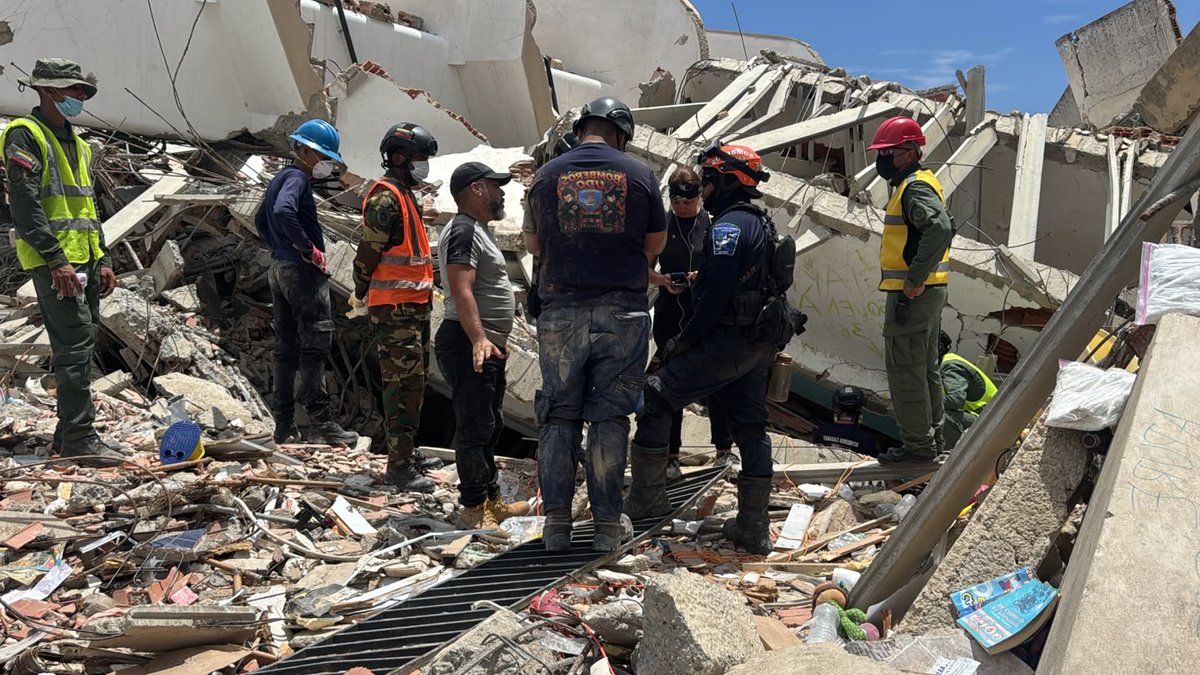
Venezuela earthquake response has been marked by community action and government opacity, according to recent observations from the disaster zone.
Communities step in as official help stalls
On 24 June, tremors toppled nearly 200 buildings in La Guaira, leaving more than 17,000 people displaced and 4,490 dead. The United Nations estimates missing persons may approach 50,000, though an official count has not been released.
A sociologist who asked to remain anonymous described how residents immediately began searching for loved ones, renting equipment and breaking through concrete to recover bodies. “People took matters into their own hands and started looking for their friends and families,” she told Health Policy Watch, noting that this sparked “an incredible wave of solidarity.”
Related: Global drop in unvaccinated kids faces funding risk
She added that the surge of community effort stemmed from a lack of confidence that the state would mobilize resources. “There was no hope that the government would mobilize resources,” she said, reflecting a broader perception that institutions are slow and under‑resourced.
In the first 72 hours, when rescue operations are most critical, civil society led the effort. Volunteers moved through rubble with bare hands, while many police officers observed from the sidelines, according to on‑the‑ground sources.
To overcome the information vacuum, citizens created collaborative platforms that mapped damaged structures, listed missing individuals and coordinated aid. One such site, terremotovenezuela.com, was founded by Mariangelli Álvarez, who explained that the platform now aims “to identify necessities, give orientation to families, and connect resources.” She warned that without continued public attention, La Guaira could be left behind.
Government claims clash with eyewitness accounts
Interim president Delcy Rodríguez held a press conference after the earthquakes, denying accusations of delayed response and asserting that institutions acted “immediately,” deploying thousands of agents and securing international cooperation.
Related: How does your lifestyle affect the quality of your semen?
However, witnesses reported that armed personnel were largely absent from rescue work. “You could see scenes of desperate people rescuing their own relatives while police officers stood on the sidelines, doing little or nothing to help,” one source recounted.
Rodríguez labeled the criticism as politically motivated, yet the lack of heavy machinery and centralized information has been a recurring theme in resident testimonies.
Before the quake, Venezuela already faced a severe humanitarian crisis. Over the past decade, hyperinflation, food and medicine shortages, and rising violence forced 7.6 million people to leave the country, according to UN data. A UN report noted that nearly eight million Venezuelans required humanitarian assistance before June 2026.
Related: What is the best setting for an engagement ring
President Nicolás Maduro remains detained in the United States and no election timetable exists. The sociologist warned that “there is a sense of grief over the loss of institutions, which deepens Venezuela’s humanitarian crisis in every respect.”
Community‑driven networks could fill gaps left by an uncertain state, especially if they secure reliable channels for supplies and information.
Reconstruction will test whether collaborative efforts that emerged after the quake can evolve into a durable framework for future emergencies.

Global drop in unvaccinated kids faces funding risk


