Global drop in unvaccinated kids faces funding risk
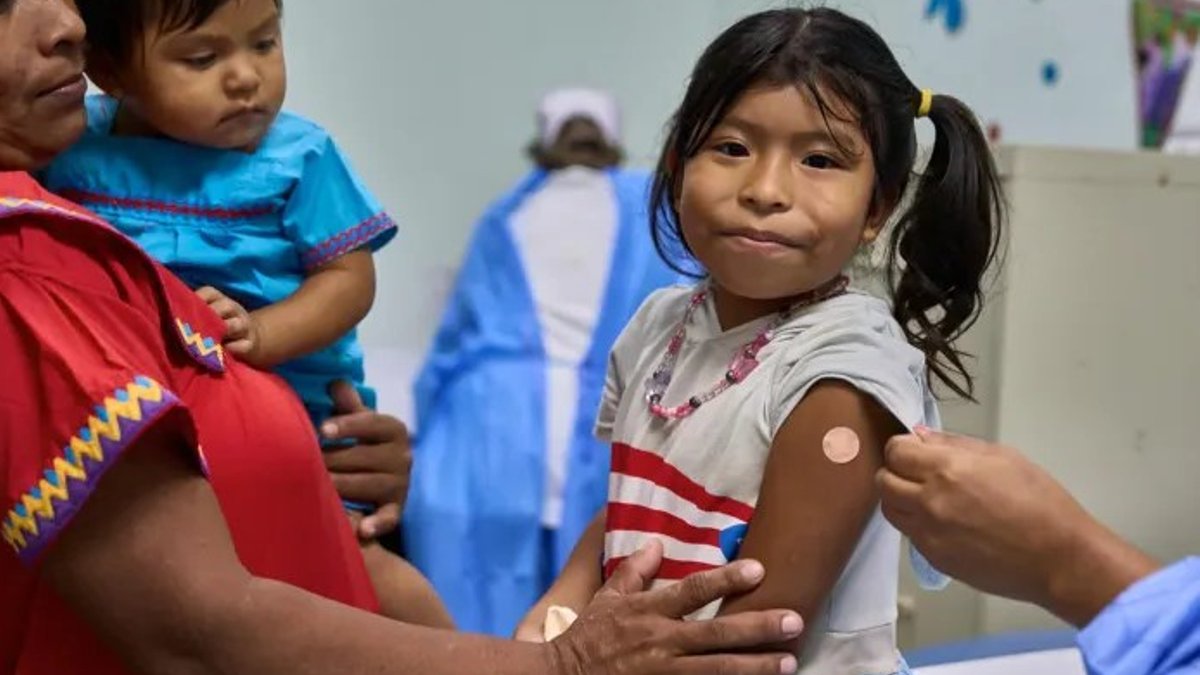
Nearly 90% of infants worldwide received at least one dose of the diphtheria, tetanus and pertussis (DTP) vaccine in 2025, and about one‑third of girls got at least one dose of the HPV vaccine, according to the latest WHO‑UNICEF estimates.
The report, based on data from 195 countries, shows the number of so‑called zero‑dose children — those who have never received any vaccine — fell by 750,000 compared to the year before. That still leaves 13.5 million children completely unprotected, and the impact of funding cuts to the global vaccine alliance Gavi has not yet fully shown up in the numbers.
Data released on Wednesday are part of the annual World Health Organization (WHO)‑UNICEF Estimates of National Immunization Coverage (WUENIC). The findings paint a mixed picture: progress in some of the poorest nations, but a widening gap between regions and a looming threat from shrinking donor budgets.
Zero‑dose numbers drop, but measles coverage stalls
Countries that made the biggest gains in reducing zero‑dose children include Sudan, India, Brazil, Ethiopia and Mexico.
But the global picture is uneven. Nigeria, the Democratic Republic of Congo and Yemen still have the highest numbers of zero‑dose children. Yemen, Papua New Guinea and Venezuela have the highest prevalence — meaning the largest share of their children are unvaccinated.
Measles coverage remains a serious concern. Globally, 84% of children received the first measles dose (MCV1) and 77% got the second dose (MCV2). The rate needed to maintain community immunity is 95%. Fifty‑seven countries reported large or disruptive measles outbreaks in 2025.
Related: 5 best quality GNC fish oil capsules for heart health and immunity
Dr. Kate O’Brien, WHO director of immunization, vaccines and biologicals, linked the stalled coverage partly to misinformation. “We think that is clearly related in some settings to false information around measles vaccination, and this is of very significant concern.”
Drop‑outs are another problem. An estimated 7.3 million infants received their first DTP dose but did not get the first measles shot, contributing to the coverage gap.
Funding cuts threaten to reverse gains
The 2025 data reflect the state of immunization before the full effect of US funding cuts.
Thabani Maphosa, Gavi’s chief country delivery officer, said the alliance is already making hard choices: “We believe that 600,000 lives that could have been saved will be impacted by this right‑sizing and trying to fit to the wallet that we have.”
The cuts may not have fully registered in the 2025 data, but the pipeline of vaccines and program operations is likely to feel the squeeze in the next reporting cycle.
Dr. O’Brien warned that the impact of those funding cuts is not yet fully visible in the current figures.
Related: Sanderstead’s Radiant Renaissance: Lab Grown Diamonds Resurge
Regional divergences and a story of backsliding
The Americas and South‑East Asia have fully recovered to pre‑pandemic levels. South‑East Asia is now the highest‑performing region. Africa, the Eastern Mediterranean and Europe, while making gains last year, remain below their 2019 baselines. The Western Pacific saw a decline and is now the region furthest behind.
South Africa, which once had a strong immunization program, has seen backsliding. “South Africa again has had a pretty strong program, and in recent years has had more challenges with their program from a structural perspective, and mostly from a fiscal perspective,” O’Brien said. “Now we’re seeing some of the effects of the financial constraints.” Bangladesh also lost ground.
Lemango noted that immunization programs in the least wealthy nations are often closing gaps faster than wealthier ones.
The International Federation of Pharmaceutical Manufacturers and Associations (IFPMA) responded to the report. Laetitia Bigger, IFPMA’s director of vaccines policy, said routine childhood vaccination remains “one of public health’s greatest success stories.” She added that the expansion of HPV vaccination shows the potential of new vaccines, but also warned that too many children remain unprotected. Her call for governments to invest in strong health systems echoes the broader concern that without sustained funding, the progress against zero‑dose children could unravel.
Efforts in African nations must consider these immunization trends as part of broader health initiatives.

Africa Clean Air Forum eyes continental pollution shift


