Home Health Checks for Parents of Asthmatic Children
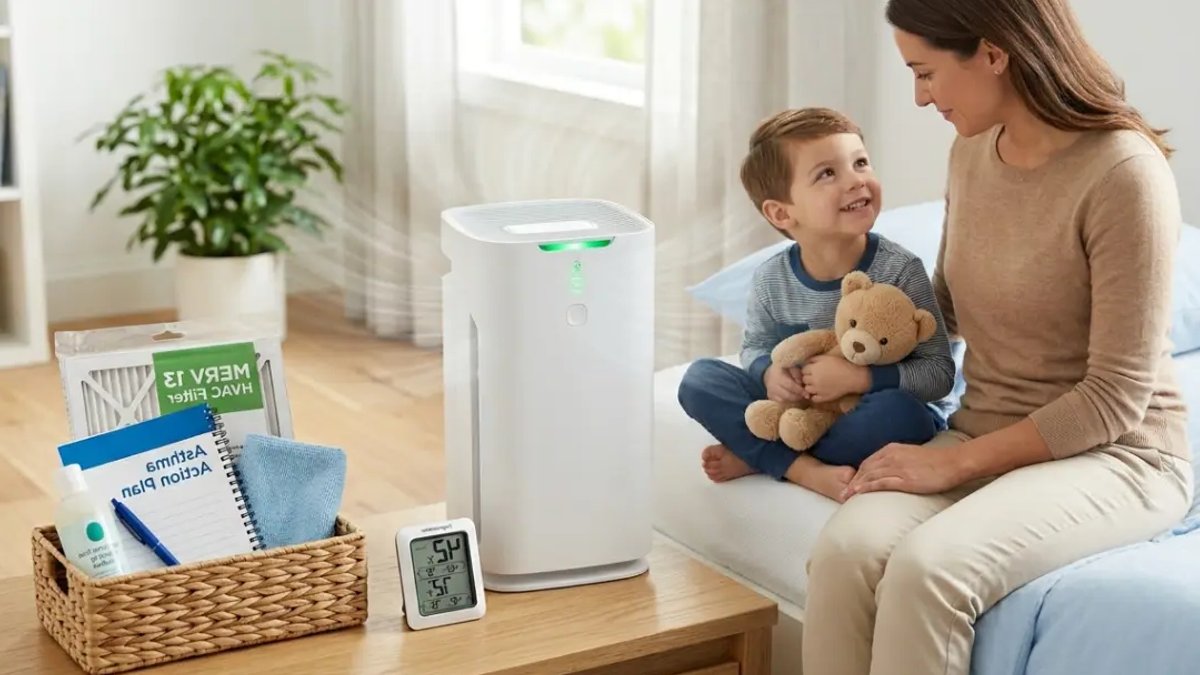
Children with asthma spend the majority of their time at home, where invisible triggers like dust mites and mold can worsen symptoms. A new guide outlines six essential home health checks parents can perform to reduce these risks. This guide prioritizes practical steps, focusing on how to identify and control environmental factors that drive childhood asthma.
Understanding Indoor Triggers
Asthma affects 8.1% of the pediatric population, and the home environment is one of the most controllable variables in that statistic. Research from Harvard T.H. Chan School of Public Health confirms that early-life exposure to indoor pollutants meaningfully increases a child’s risk of developing and worsening asthma. That means what is happening inside your walls matters as much as the prescriptions in your cabinet.
The six most common indoor asthma triggers are dust mites, mold, pet dander, secondhand smoke, volatile organic compounds (VOCs), and pollen tracked indoors. A higher number of triggers present correlates directly with worse asthma control and more frequent flare-ups. Most parents are aware of one or two of these but have not systematically checked for all six.
Dust mites live in mattresses and pillows, while mold thrives in damp areas like bathrooms and basements. Pet dander proteins remain airborne for hours, and VOCs from cleaning products can irritate airways even at low concentrations. If you are unsure which triggers affect your child most, ask your child’s doctor about allergy testing to make the rest of these checks more targeted.
Monitoring Air Quality and Humidity
Checking indoor air quality for a child with asthma means monitoring for airborne particles and controlling the sources that produce them. A landmark study involving 225 children aged 6 to 12 with asthma found that homes using HEPA air cleaners had 42 fewer unscheduled asthma visits over the course of the study. That is a significant reduction that came from a single intervention: placing HEPA purifiers in the bedroom and main living area.
Related: Poor hospital communication endangers patients
For a child with asthma, indoor humidity should stay between 30% and 50%. The EPA recommends this range to prevent mold growth and keep dust mite populations under control. Both mold and dust mites thrive when humidity climbs above 50%. Dust mites cannot survive when the relative humidity stays below 50% for extended periods, which is a real, practical lever you can pull without buying anything expensive.
A $15 digital hygrometer from any hardware store tells you exactly where your home sits right now. Place one in your child’s bedroom and one in the most moisture-prone room. If any room regularly reads above 55%, a dehumidifier brings it back into range. Basements and bathrooms are the most common problem areas, and a slow drip under a sink creates a damp microenvironment that mold colonizes within 24 to 48 hours.
Filter Maintenance and Product Choices
If your child has asthma, you should change your HVAC filter every 60 days, using a filter with a MERV rating between 11 and 13. MERV stands for Minimum Efficiency Reporting Value: it is a scale from 1 to 16 that measures how small a particle a filter can trap. A MERV 11-13 filter catches dust mites, pet dander, mold spores, pollen, and some bacteria. A standard cheap filter mostly just protects the equipment.
Homes with asthma or respiratory concerns should use MERV 11 at a minimum, with MERV 13 for more severe cases. The caveat is that higher MERV ratings create slightly more resistance in your airflow. Check your HVAC manual to confirm your system can handle MERV 13 before upgrading. A smart thermostat with humidity control can also help you manage both temperature and moisture from one device.
The main household product categories that trigger asthma are scented cleaning sprays, aerosol products, fragrant candles and diffusers, scented laundry detergents, and air fresheners. These release chemical compounds that directly irritate sensitive airways, and the effects can linger for hours after use. Children exposed to secondhand smoke are 1.5 times more likely to have physician-diagnosed asthma or wheezing than unexposed children.
Related: Fall victims entitled to compensation claims
Switch to fragrance-free, low-VOC alternatives for cleaning products. The “clean” smell from conventional cleaning sprays usually comes from synthetic fragrances that are irritants, not indicators of cleanliness. Both scented candles and plug-in fresheners release VOCs and particulates. Open a window instead, or use a HEPA purifier to deal with odors at the source.
Many scented detergents leave residue on sheets and clothes that your child inhales during sleep. Fragrance-free versions work just as well and remove a consistent daily exposure. Aerosol sprays like hairsprays and furniture polish release fine particles. Use pump alternatives where possible, and never use aerosols near your child or in their bedroom.
Focus on the Bedroom Environment
Your child spends 8 to 10 hours in their bedroom every night. That is the single longest continuous exposure window to any environment in their day. If there is one room to focus on first, it is this one. The mattress and pillow covers alone changed how many morning symptoms parents were dealing with when they started looking at their home systematically.
Allergen-proof mattress and pillow covers create a barrier between your child and the dust mite population living in the mattress. Wash the encasements monthly. Wash all bedding in water heated to at least 130°F every week. Studies confirm this temperature kills dust mites, while a cooler wash leaves them alive.
Stuffed animals are dust mite habitats. Limit the number in the bedroom. Wash weekly in hot water, or seal them in a plastic bag and put them in the freezer overnight once a month. Floor placement matters significantly; carpet holds significantly more allergens than hard floors and is nearly impossible to fully clean. If carpet replacement is feasible, bare floors with washable rugs are meaningfully better for air quality.
Related: User Account Blocked by Social Media Platform
Place the HEPA unit in the bedroom, specifically, not just the living area. Position it between the door and the bed so it is filtering the air your child breathes during sleep. Every surface that collects dust is a trigger reservoir. Fewer items on shelves and floors means less to clean and less to accumulate allergens.
Building a Routine
A single deep clean every few weeks is less effective than a lighter, consistent routine done every week. Allergens like dust mite droppings and mold spores accumulate steadily and require steady removal to stay below the threshold that triggers symptoms. Buildup prevention is the goal.
Monday: Wash bedding on hot. Wipe hard surfaces with a damp cloth. Vacuum mattress with a HEPA vacuum. Wednesday: HEPA vacuum all carpets and upholstered furniture. Wipe down vents and air registers. Check humidity readings. Friday: Scrub bathroom surfaces and dry thoroughly. Run the exhaust fan for 15 minutes after cleaning. Check under the sink for any moisture or drips.
Replace HVAC filters every 60 days. Check the air purifier filter monthly and replace it per the manufacturer’s schedule. Inspect the basement or crawl space quarterly for moisture or mold signs. Involving older children in some of these tasks also serves a purpose beyond just helping. It builds their own awareness of how their environment connects to how they feel.
Monthly Checklist
- Air Quality: HEPA air purifier running in the bedroom and main living area. HVAC filter rated MERV 11-13 and replaced within the last 60 days. Windows kept closed during high pollen days. No ozone-generating air purifiers in use.
- Humidity and Mold: Indoor humidity reading between 30–50% in all rooms. No visible mold in bathrooms, kitchen, or basement. No musty smell anywhere in the home. Exhaust fans working in the bathroom and kitchen. No active leaks under sinks or around windows.
- Household Irritants: All cleaning products are fragrance-free. No aerosol sprays used near the child’s spaces. No smoking indoors. No scented candles or plug-in air fresheners in use. Laundry detergent is fragrance-free.
- Bedroom: Allergen-proof mattress and pillow covers in place. Bedding washed in hot water (130°F+) this week. Stuffed animals washed or frozen this month. Floors vacuumed with HEPA vacuum this week. Air purifier positioned between the door and the bed.

Poor hospital communication endangers patients


