Vital Signs: Global Health Developments
Global health agencies are struggling to adapt to a funding crisis that has turned the industry’s dominant funding crisis in decades.
At Unitaid and Global Fund headquarters on the outskirts of Geneva, agency leaders are trying to adjust their work to this new reality. Last week, one phrase—”self-reliance”—did more work in global health than any medicine, as global agencies continue operationalising donor retreats they can no longer disguise. The strategy’s real-world test is unfolding in eastern Congo, where the fastest-growing Ebola outbreak on record is outrunning a struggling response.
Shrinking resources
The institutions of global health spent the week managing their own diminishment, and the language they used to describe it deserves closer scrutiny. The Global Fund’s eighth replenishment secured $12.64 billion against its $18 billion target to fight AIDS, tuberculosis, and malaria. The Global Fund’s Board meeting in July, unable to mobilise more money, approved the machinery of retreat dressed as reform. This includes a policy allowing countries to purchase through the Global Fund’s platform—as a bridge-financing facility for nations “moving toward self-reliance.”
Related: Unitaid leadership search raises transparency concerns
There is also a schedule under which 61 programmes across 35 countries will lose Global Fund support in the current three-year cycle, against only 21 entering. The Board was disarmingly candid about the direction of travel—what is new, it said, is the scale and pace of transition it is now driving. The honesty is welcome. The euphemism is not.
“Self-reliance” is the term of art for a donor withdrawal that recipient countries did not choose and, in many cases, cannot yet absorb. The United States accounted for the largest drop in development assistance for health in 2025, but it was not alone in slashing funding. The backdrop is a year of American-led demolition. The Fund’s 8th replenishment closed in February at US$12.64 billion, well short of the US$18 billion it had sought, as France cut its contribution and the European Union delayed its pledge.
WHO, whose US withdrawal took formal effect in January, still faces a $420 million gap across its 2025–27 base budget—even after already shedding nearly a quarter of its workforce—some 2,507 posts—as of March 2026. That’s not including a $553 million deficit in the Emergencies budget, funded separately through donor appeals. The world’s normative health authority is hollowed out at precisely the moment its authority is most needed. None of this is incidental to the week’s events; it is the gravitational hole into which every global health decision is getting sucked.
Related: Earth’s Treasures: Celebrating the Natural Beauty of Gemstone Rings
It would be too easy, though, to treat country ownership as merely a cover story. Dependence on a handful of Western capitals was always a fragility rather than a virtue, and a system in which a single election in Washington can imperil HIV treatment for millions was never sound. The ambition to build financing on domestic revenue and boosting regional institutions—Africa CDC foremost among them—is the right one, and some of the Global Fund’s stated shifts, such as concentrating resources on the poorest, highest-burden countries, are genuinely progressive. The quarrel is not with the destination but with the sequencing and the candour. Transition dictated by the rhythm of donor budgets rather than the readiness of national systems is not empowerment; it is abandonment with better branding.
Visible retreat in DRC
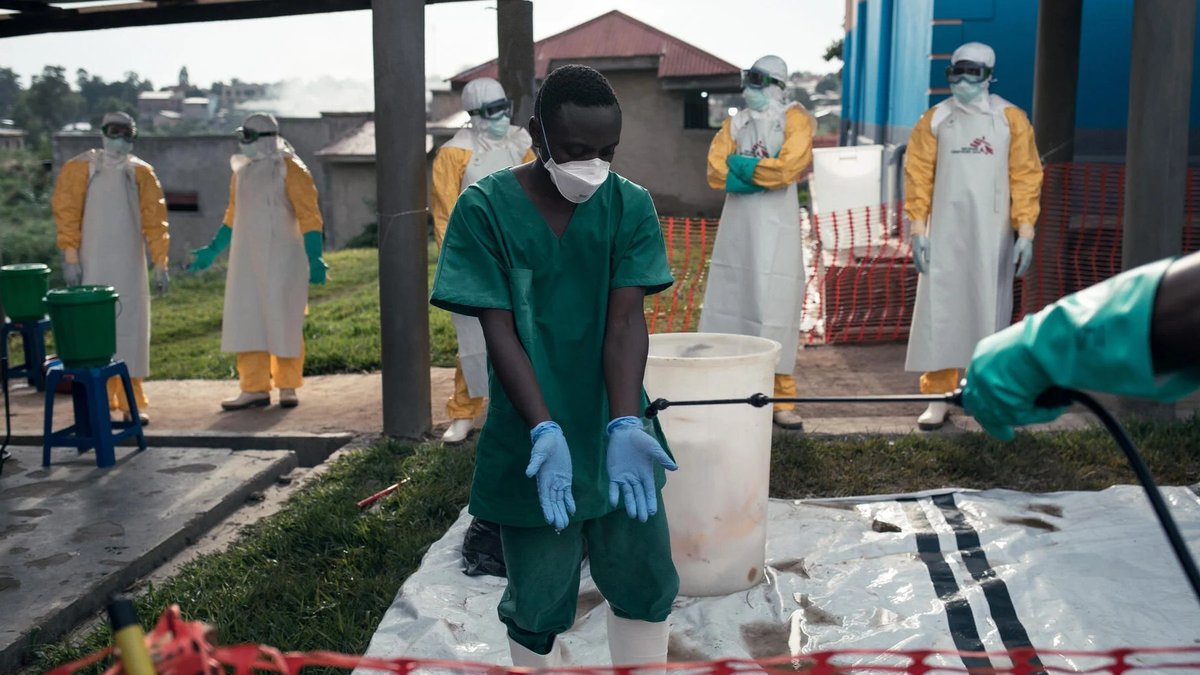
What that retreat looks like in real time was visible this week in eastern Democratic Republic of Congo. The Bundibugyo Ebola outbreak reached 2073 confirmed cases and 796 deaths by 14 July, a case-fatality rate near 37% and the fastest-growing the continent has recorded. WHO conceded that roughly 80% of new cases fall outside its contact tracing lists, and its emergency operation offered no comfort: it was not catching up in the race. Among the causes are funding gaps and unpaid, striking health workers. In Sudan, meanwhile, cholera has returned to Darfur and Kordofan with 1,330 cases and a case-fatality rate of 13.7%—a figure that testifies to how little care is reaching the sick. These are not abstractions about budget lines. They are fires being fought with fewer hands, and the arithmetic of the ledger is being written in mortality.
Frontline Ebola responders in Ituri walked off the job last week over unpaid wages. Surveillance teams, security staff, community mobilisers and burial teams are among those striking.
Related: HOSPITAL CALL CENTER BEST PRACTICES
Diplomacy without a treaty
The same underlying contest runs through global health diplomacy. The seventh meeting of the Intergovernmental Working Group on the WHO Pandemic Agreement, held in July, again failed to resolve the Pathogen Access and Benefit-Sharing system—the treaty’s unfinished heart. Two competing models remain on the table, and the dispute is, at bottom, about power: whether countries that supply pathogen samples are guaranteed the vaccines and therapeutics those samples yield or, once again, they are asked to furnish the raw material of global security while queuing for the products. Covid answered that question in practice, and the answer was not an equitable one. A year after the Pandemic Agreement was adopted with considerable self-congratulation in 2025, its central bargain remains unsettled. A treaty without PABS is an empty handshake, however brave the smile that accompanies it.
Opacity in austerity
Beneath the headline crises, the global health machinery continues to reshuffle with little scrutiny. Unitaid is conducting a closed leadership search amid budget cuts. The Global Fund’s own hunt for an executive director continues, accompanied by pointed but ultimately vain calls for Germany to fill the vacuum Washington has left. WHO, even as it cuts, has not been able to respond convincingly to the criticism that it continues to rely heavily on an unreported shadow workforce of consultants, which is almost as large as the remaining hollowed-out workforce of staff.
This is a reminder that austerity and opacity often travel together, and that those urging discipline on others owe the same transparency in return. In a leaner system, the questions of who governs, and how openly, will matter more than they did in a flush one. The next Director General of WHO, the election process for which is beginning to lumber forward, should note.

Unitaid leadership search raises transparency concerns


