SMS Reminders Cut Doctor Office No Shows
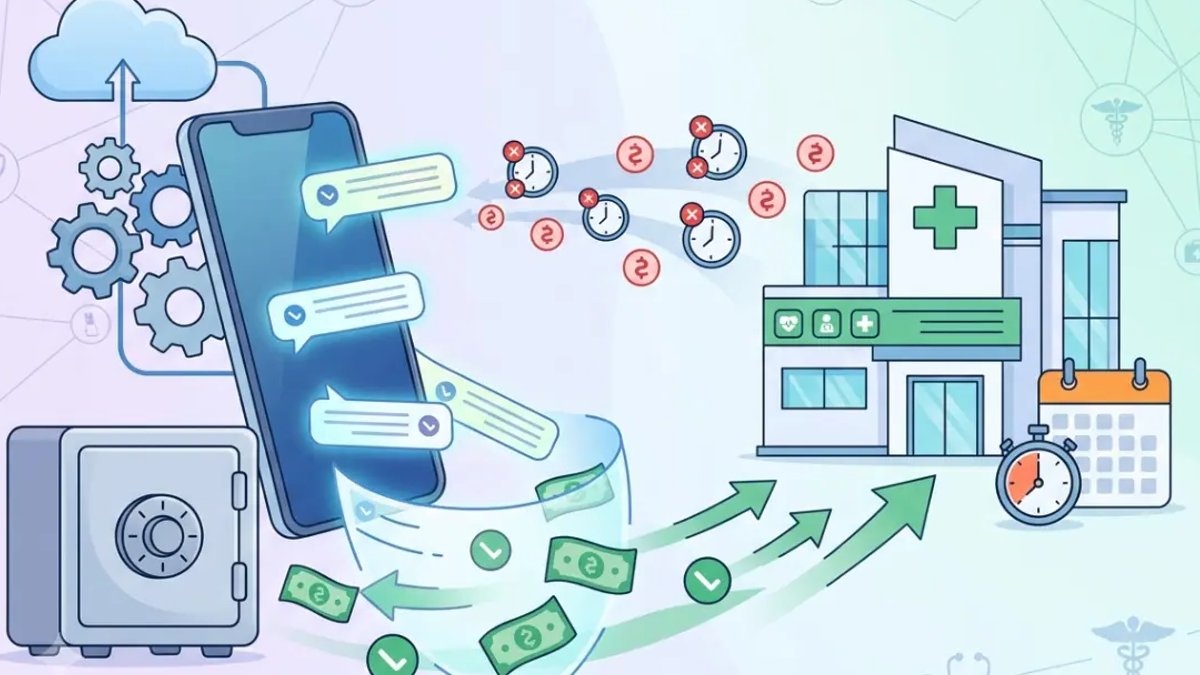
Automated SMS reminders can significantly reduce practice no-shows. The average missed appointment costs a practice around $200 in lost revenue and physician time.
Multiply that by a no-show rate of 23%, the national average across US outpatient practices, and you’re looking at a real, recurring financial leak that quietly compounds every single month.
A single missed appointment costs a private practice an average of $200, but that figure understates the real damage. The slot cannot be sold again. The staff has already prepared for it.
The cumulative loss across a week, a month, and a year is the number that should get practice owners’ attention. For a single provider seeing 20 patients a day, a 7% no-show rate works out to roughly $46,000 to $83,000 in lost annual revenue.
These aren’t opportunity costs. The overhead fired anyway. The staff was there. The room was prepped.
Phone calls and postcards were designed for a different era of patient behavior. They’re not failing because practices are using them badly. They’re failing because the environment they were built for no longer exists.
68% of consumers now text more than they talk on their smartphones. Three out of ten people say they would give up phone calls entirely in favor of texting.
When a practice calls to confirm an appointment, that call goes to voicemail a significant percentage of the time, and voicemails are rarely returned.
Related: Doctors find ways to cut insurance costs
Automated SMS reminders reduce no-show rates by reaching patients immediately through the channel they already use, without requiring any login, app download, or effort on their part.
Automated SMS reminders reduce no-show rates by up to 38%, and the system runs continuously once it’s set up. Text messages get read. SMS has a high open rate.
A phone call goes to voicemail. A text arrives on the lock screen and is seen within minutes.
What makes SMS work where other methods don’t is the lack of friction. There’s nothing to download, no portal to log into, no call to return.
Practices that adopt mobile messaging solutions for appointment reminders typically see patients confirm, reschedule, or cancel well in advance, giving front desk staff time to fill the resulting opening.
In practice, this means that patients are more likely to show up for their appointments, and when they don’t, the practice has a better chance of filling the empty slot.
This reduction in no-shows can have a significant impact on a practice’s revenue.
By reducing no-shows, practices can also reduce the amount of time and resources spent on trying to fill empty slots, which can be a significant cost savings.
Related: Africa must frame pollution as financial risk
Automated SMS reminders can be HIPAA-compliant, but only when the platform used is designed specifically for healthcare and includes a signed Business Associate Agreement (BAA).
A standard consumer texting tool does not meet the standard. A purpose-built healthcare messaging platform does.
The distinction matters because HIPAA requires that any platform handling patient information agree contractually to protect it.
In practice, compliant SMS reminders typically include the appointment date and time but avoid including specific diagnosis information, treatment details, or anything that would identify the medical reason for the visit in the message body.
The confirmation happens through a simple reply to the text. Sensitive clinical information stays in the secure patient record, not the reminder itself.
By using a HIPAA-compliant platform, practices can ensure that they are protecting their patients’ sensitive information while also reducing no-shows and improving revenue.
One of the key benefits of automated SMS reminders is that they can be easily integrated into a practice’s existing workflow, without requiring significant changes or additional staff training, allowing them to start seeing the benefits, such as reduced no-shows and improved revenue, quickly and with minimal disruption to their existing operations, similar to how daily routines can help patients in recovery.
As the use of automated SMS reminders becomes more widespread, it’s likely that we’ll see even more innovative applications of this technology in the healthcare industry.

Daily Routines Help Prevent Relapse in Early Sobriety


