
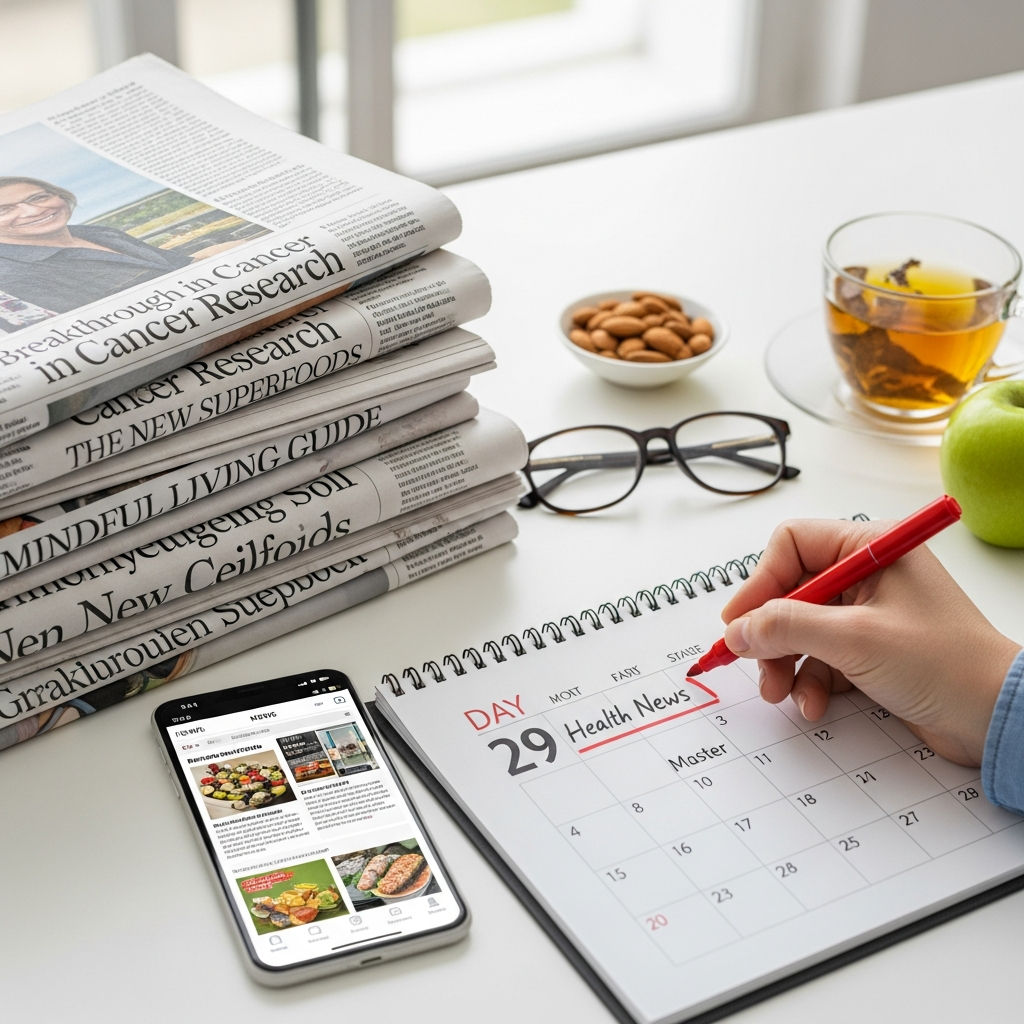
How to Master Health News in 29 Days: A Step-by-Step Guide
In an era where information travels faster than a heartbeat, staying informed about your well-being has never been more critical. However, the sheer volume of “breakthroughs,” “miracle cures,” and “hidden dangers” reported daily can lead to information fatigue and confusion. If you have ever felt overwhelmed by conflicting advice on nutrition, exercise, or medical treatments, you are not alone.
Mastering health news isn’t about becoming a doctor; it’s about becoming a sophisticated consumer of information. By dedicating just 29 days to refining your health literacy, you can learn to distinguish between rigorous science and sensationalist clickbait. This guide provides a structured, four-week roadmap to help you navigate the complex landscape of medical journalism and wellness trends.
Why Health News Literacy Matters in the Digital Age
The stakes of health news are significantly higher than those of entertainment or tech news. Misinformation in this sector can lead to dangerous lifestyle choices, wasted money on ineffective supplements, or unnecessary anxiety. Mastering health news allows you to:
- Make Informed Decisions: Base your lifestyle and medical choices on evidence rather than anecdotes.
- Save Time: Quickly filter out low-quality reports so you can focus on what truly affects your longevity.
- Communicate with Professionals: Enter your doctor’s office with better questions and a clearer understanding of modern medical context.
Week 1: Building Your Credibility Filter (Days 1–7)
The first week is dedicated to identifying where news comes from and which sources deserve your trust. Not all “experts” are created equal, and not all websites have your best interests at heart.
Day 1-3: Identify the “Gold Standard” Sources
Start by bookmarking reputable organizations. These should be your baseline for verifying any news you see on social media. Focus on:
- Government Agencies: The NIH (National Institutes of Health), CDC (Centers for Disease Control), and the NHS (National Health Service).
- Academic Institutions: Harvard Health, Mayo Clinic, and Johns Hopkins Medicine.
- Peer-Reviewed Journals: The Lancet, JAMA (Journal of the American Medical Association), and The New England Journal of Medicine (NEJM).
Day 4-7: Spotting Red Flags
Learn to identify the hallmarks of “junk science.” Be wary of articles that use “miracle,” “secret,” or “cure” in the headline. Look for the “Who, What, and How”: Who funded the study? What was the sample size? How was the data collected? If a news piece lacks links to the original study or doesn’t mention the authors, it’s a major red flag.
Week 2: Cracking the Code of Scientific Studies (Days 8–14)
To master health news, you must understand the language of the science behind the headlines. You don’t need a PhD, but you do need to know the hierarchy of evidence.
Day 8-10: Correlation vs. Causation
This is the most common pitfall in health journalism. Just because two things happen at the same time doesn’t mean one caused the other. For example, a study might show that people who drink green tea live longer. This is a correlation. It doesn’t prove green tea caused the longevity; those people might also exercise more or smoke less. Look for “Randomized Controlled Trials” (RCTs) to find causation.
Day 11-14: Mice, Men, and Sample Sizes
Many “breakthroughs” reported in the news were actually performed on mice or in Petri dishes (in vitro). While these are important for early science, they rarely translate directly to human health. Always check if the study was conducted on humans. Additionally, a study of 10 people is far less reliable than a meta-analysis of 10,000 people. Mastery means looking for “Large-scale Meta-analyses” as the peak of evidence.
Week 3: Navigating Niche Health Trends (Days 15–21)
Now that you have the tools to evaluate general news, it’s time to apply them to specific, high-noise areas like nutrition, mental health, and biohacking.
Day 15-17: The Nutrition Noise
Nutrition is notoriously difficult to study because people are bad at reporting what they eat. When you see news about “The Best Diet,” check if it was an observational study (unreliable) or a metabolic ward study (highly reliable). Remember that nutrition is highly individualized; what works for a 20-year-old athlete may not work for a 60-year-old sedentary office worker.
Day 18-19: Mental Health and Neuroscience
The brain is the new frontier of health news. Be cautious of “brain imaging” studies that claim to show exactly where “happiness” or “fear” lives. These are often oversimplifications of complex neurological processes. Look for longitudinal studies—those that follow people over many years—when evaluating mental health advice.
Day 20-21: Biohacking and Supplementation
The supplement industry is loosely regulated. When news breaks about a new “longevity molecule” (like NMN or Resveratrol), look for independent third-party testing and human clinical trials. Most supplements have high marketing budgets but low evidentiary support.
Week 4: Implementing Your Personalized Information System (Days 22–29)
In the final week, you will move from learning to doing. This is about creating a workflow that keeps you informed without causing stress.
Day 22-24: Curate Your Feed
Stop relying on the “discover” page of social media. Use tools like Feedly or RSS readers to follow the newsrooms of the “Gold Standard” sources identified in Week 1. Subscribe to curated newsletters from medical journalists who prioritize evidence over clicks, such as those from The New York Times “Well” section or STAT News.
Day 25-27: Fact-Checking Tools
Learn to use fact-checking resources. Sites like HealthNewsReview.org (archived but still valuable) and PubMed are your best friends. If a headline seems too good to be true, search the topic on PubMed and filter for “Review” or “Systematic Review” to see the scientific consensus.
Day 28: The Synthesis Challenge
Pick a major health news story from the last 24 hours. Write down three things:
- What is the core claim?
- What was the source of the data (RCT, observational, or animal study)?
- Are there any conflicts of interest mentioned (e.g., industry funding)?
If you can answer these, you have achieved mastery.
Day 29: Final Mastery Check
On the final day, review your new information diet. Are you feeling less anxious? Are you spending less time on sensationalist sites? True mastery of health news is a lifelong habit of healthy skepticism. You are now equipped to be your own gatekeeper.
Conclusion: Becoming a Proactive Health Consumer
Mastering health news in 29 days isn’t about knowing every medical fact; it’s about developing a mental framework to process information. By understanding the difference between a mouse study and a human trial, and by knowing which sources to trust, you protect yourself from the “outrage cycle” of modern media.
In the long run, this literacy leads to better health outcomes, reduced medical costs, and a more empowered relationship with your healthcare providers. Health is your greatest asset—ensure that the news you consume to protect it is as high-quality as the life you want to lead. Start your Day 1 today, and by this time next month, you’ll never look at a health headline the same way again.