DRC Ebola cases top 2000 as response lags
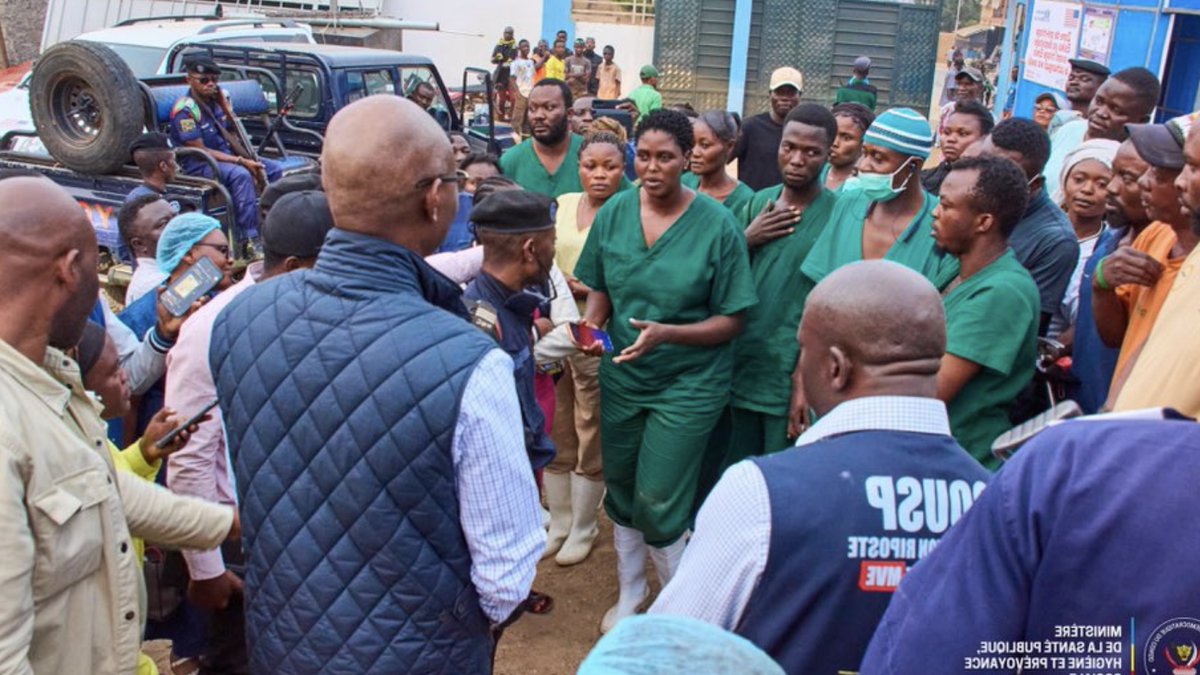
The Democratic Republic of Congo’s Ebola outbreak, now two months old, is spreading faster than health workers can contain it. World Health Organization Director General Dr Tedros Adhanom Ghebreyesus told reporters Thursday that the epidemic is “continuing to outpace the response,” making it the fastest-spreading Ebola event on record.
As of the latest count, 2,073 people have been infected and 796 have died. The epicenter is Ituri province, where “intense transmission” remains the agency’s top concern. Tedros said more than 80% of new cases are being found outside known contact lists, meaning health workers are missing entire chains of infection.
The previous major outbreak in the DRC, which ran from 2018 to 2019, took 10 months to reach 2,000 confirmed cases.
“Active armed conflict is hampering access to the affected areas and hindering the response,” he said. He also reported that another treatment center in Bunia was attacked on Wednesday, and appealed for international funding to close a $400 million shortfall. “This is not charity. It’s an investment in national security,” Tedros stressed.
Related: Pandemic talks weigh two pathogen sharing models
Most patients never reach a hospital bed
Dr Chikwe Ihekweazu, executive director of the agency’s Health Emergencies Programme, said the priority now “is getting cases into care.” Over 60% of deaths are happening in communities, which means infected people were likely sick and contagious for weeks before they died. Health officials only discovered these cases by taking swabs from bodies just before burial.
“Your chances of survival are three to four times higher when you come into care,” Ihekweazu said. The case fatality ratio is about 30 to 40% overall, but drops to 10 to 15% for patients who receive treatment. For those who die at home, the fatality rate is 60 to 70%.
To encourage people to seek help, the DRC government is now offering free healthcare for all diseases to anyone who shows up at a clinic or hospital in the outbreak zone.
He, who recently returned from the epidemic’s epicenter, described a workforce of “incredibly committed” health workers going out every day. Ihekweazu warned the fight would be a marathon, not a sprint.
Related: The World's Healthiest Foods
Vaccine trial begins in Oxford as antivirals tested in the DRC
On Monday, the Oxford Vaccine Group launched the world’s first Phase I trial of a Bundibugyo ebolavirus vaccine. The trial is recruiting 50 healthy adults aged 18 to 55 in Oxford, United Kingdom, to test the safety and immune response of the ChAdOx1 BDBV vaccine. It uses the same viral vector platform as the Oxford/AstraZeneca COVID-19 vaccine.
The Serum Institute of India has already manufactured and stockpiled about 620,000 doses of the vaccine candidate, ready for rapid deployment if the trial succeeds. The work is funded by the Coalition for Epidemic Preparedness Innovations as part of an $8.6 million program to develop Bundibugyo vaccines.
Separately, a trial of two antivirals began enrolling patients in the DRC at the beginning of July.

Pandemic talks weigh two pathogen sharing models


